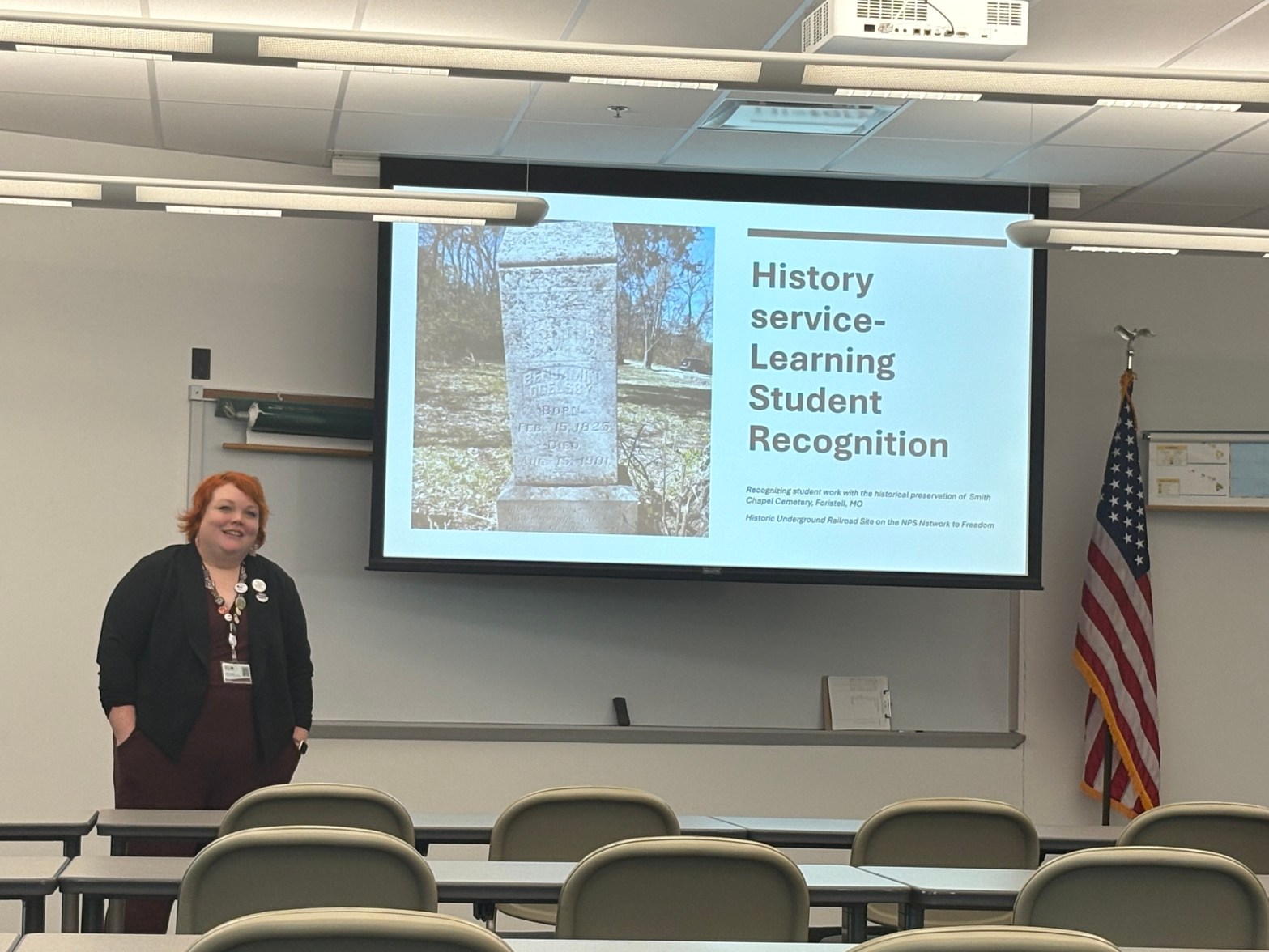
In Foristell, Missouri, the Smith Chapel Cemetery, was begun by nine Trustees for the Smith Chapel AME Church established in 1871, was listed on the National Underground Railroad Network to Freedom in 2024. Now, students from St. Charles Community College, studying with Professor Grace Wade Moser are working to uncover the history of this small African American cemetery in western St. Charles County. In the cemetery, you find the graves of at least freedom seekers. Benjamin Oglesby (1825-1901) who fled enslavement in 1864, joined the 56th U.S. Colored Troops leaving behind his wife Patsy and several children. Smith Ball (1833-1912) who also resisted his enslaver and joined the U.S. 68th U.S. Colored Troops in 1864. Martin Boyd (1826-1912) escaped from the Boyd family’s plantation, and enlisted in the U.S. 49th U.S. Colored Troops at Fort Peruque. In 2025, the historic Smith Chapel Cemetery was awarded a National Park Service Grant, because of its listing on the National Underground Railroad’s Network to Freedom, providing funds for cemetery restoration work, and for four educational signs to be placed that will provide further information about the property, including the former site of the Douglass schoolhouse (which is now located in Oglesby Park and also on the National Underground Railroad Network to Freedom), the former site of the African Methodist Episcopal Chapel, and more importantly, the cemetery itself.

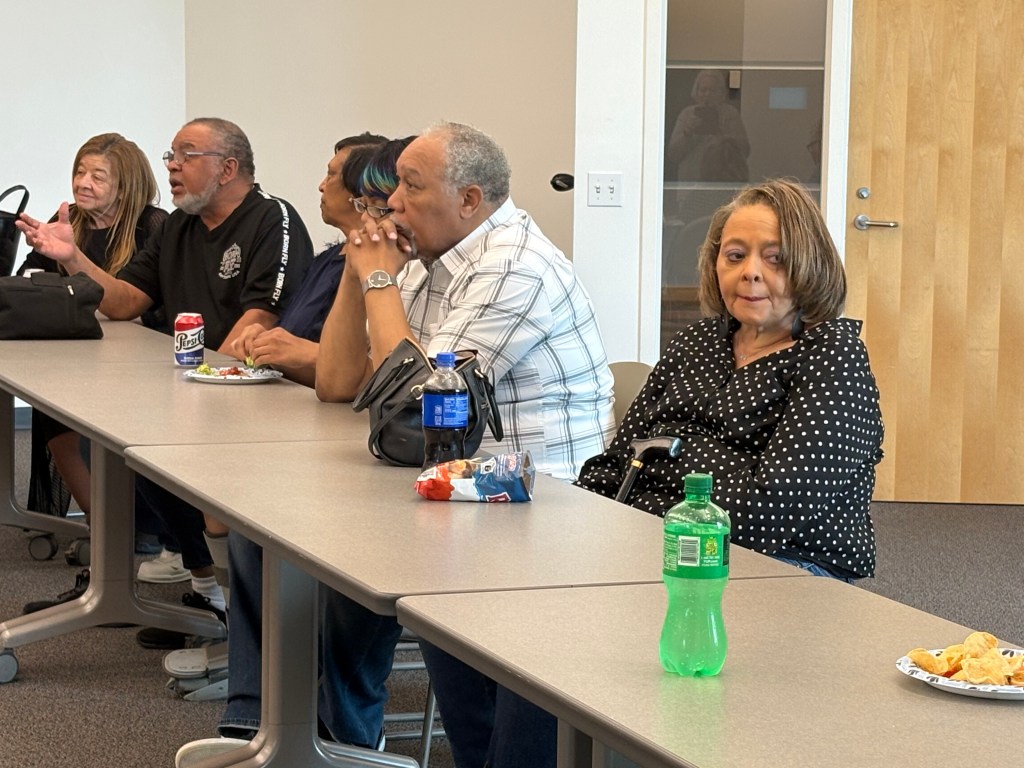
On Wednesday, May 7, 2025, The St. Charles Community College students taking Moser’s American History Class /Service Learning were recognized with a Student Recognition Day where they presented their fellow students, family members of Smith Chapel Cemetery, and the community, with stories about what they have learned. Several students shared their work with military records, death certificates, newspapers, and online family trees. Others shared their experience of recording Oral Histories and their time working directly in the cemetery with Jerry Prouhet, a professional cemetery restorer. They have had several workdays in the cemetery working to locate lost headstones, and righting broken and overturned headstones. The students’ research will be added to the website and shared at future events. More students taking the fall semester will be able to add to the wealth of knowledge that the Spring 2025 students began.
In 1998, legislation titled the National Underground Railroad Network to Freedom Act of 1998, was passed, creating the Network to Freedom program. Through collaboration with local, state and federal entities, as well as individuals and organizations, its mission is to honor, preserve and promote the history of resistance to enslavement through escape and flight, which continues to inspire people worldwide. Through its mission, the Network to Freedom helps to advance the idea that all human beings embrace the right to self-determination and freedom from oppression. The program is a catalyst for innovation, partnerships, and scholarship that connects and shares the legacy of the Underground Railroad across boundaries and generations. The program consists of sites, locations with a verifiable connection to the Underground Railroad; programs, with educational and interpretive programs that pertain to the Underground Railroad; and facilities, either research, educational or interpretive centers.
The Underground Railroad is one of the most remarkable stories in American history. This is a story of ordinary men and women coming together in harmony, united to pursue the extraordinary mission of helping those in their journey to freedom. This movement, which thrived from the late 18th century through the Civil War, was a testament to the power of unity, courage, and a shared commitment to liberty. The Underground Railroad—the resistance to enslavement through escape and flight, through the end of the Civil War—refers to the efforts of enslaved African Americans to gain their freedom by escaping bondage. Wherever slavery existed, there were efforts to escape. These acts of self-emancipation labeled slaves as “fugitives,” “escapees,” or “runaways,” but in retrospect “freedom seeker” is a more accurate description. Many freedom seekers began their journey unaided and many completed their self-emancipation without assistance, but each subsequent decade in which slavery was legal in the United States, there was an increase in active efforts to assist escape.
 Smith Chapel Cemetery